


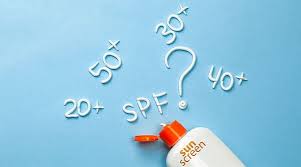
Tips for Choosing the Best Sunscreen for Sensitive Skin
Have you ever experienced an allergic reaction or itchiness, or irritation to your skin after exposing your skin to the sun even for a little moment? That may be the sign that you have sensitive skin and they are so delegated that they easily get affected by environmental factors. In such cases, you need to take care of your skin a little bit more. If you have sensitive skin and need to go outdoors daily, then stepping without applying sunscreen could be very harmful for your skin, especially if you are living in an area with intense heat and humidity, like the UAE.
Now, there might be a question for many people about how we know which sunscreen is best for my skin. This question is very common, and many of them use sunscreen, but they don't even know if the sunscreen they are using is good for their skin or not. You’ve probably heard about sunscreen and some jargon like SPF, but do you know which sunscreen with what SPF is suitable for you?
A Complete Guide to Sunscreen
Sunscreen helps to protect your skin from harmful UV rays (UVA and UVB) coming from the sun. These rays are harmful to your skin, so a sunscreen creates a protective layer over your skin and acts as a shield that blocks the effect of harmful rays and also reduces the risk of other skin-related concerns. Prolonged exposure to the sun may cause sunburn, immediate irritation, redness, tanning, premature aging, and even skin cancer, and this is where sunscreen plays a crucial role.
Importance of SPF and Broad-Spectrum Protection
UVA and UVB are the two main types of UV radiation that reach the Earth’s surface. Sunscreen’s SPF (Sun Protection Factor) number indicates how well it helps to protect your skin from the harmful UVB radiation. The higher SPF results in more protection, but it doesn't mean that it will completely protect your skin from UV radiation. Things that you should know about SPF, which gives more clarity.
More SPF doesn’t mean:
-
You don’t need to reapply it.
-
It would work for the whole day.
-
It protects your skin from UVA rays too (SPF protects from UVB radiation only).
|
SPF Level |
UVB Protection |
|
SPF 15 |
~93% UVB rays block |
|
SPF 30 |
~97% UVB rays block |
|
SPF 50 |
~98% UVB rays block |
|
SPF 100 |
~99% UVB rays block |
A sunscreen labeled broad-spectrum means it protects your skin from both UVA and UVB radiation. As SPF only protects from UVB rays, that’s why it is recommended to use a sunscreen labeled with broad-spectrum. It protects your skin from premature aging, tanning, sunburn, and cell damage and promotes long-term skin health.
Note: Use a sunscreen that is labeled with both SPF and Broad-spectrum protection.
Role of Sunscreen in Sensitive Skin
Sensitive skin is those who get easily reactive to various external or internal stimuli, like sunlight, pollution, heat, or harsh products. For such skin types, sunscreen acts as a protective shield. Sensitive skin gets easily damaged by UV rays, so sunscreen blocks or absorbs the UV rays. It also prevents the risk of sunburn, redness, and itching, and keeps the skin calm and protected. Apart from this, it makes the skin barrier strong, which reduces inflammation and controls redness, in addition to protecting from long-term skin damage. That’s why sunscreen is a necessity for a person having sensitive skin.
How to Choose the Best Sunscreen for Sensitive Skin?
UAE is a place where extreme heat, high humidity, and strong UV exposure last almost all year round. Some places have dry wind and pollution. This is why every skin type needs sunscreen here, whether you are inside your home or office, UVA rays can damage the skin even through windows.
So, which sunscreen would be best for you? Let’s figure this out.
-
Sunscreen having at least SPF 30+. SPF 30 would not be enough for better protection in such areas.
-
There should be a broad-spectrum protection label on sunscreen.
-
It should not contain fragrance, alcohol, or parabens.
-
Always go for a lightweight, non-sticky, and non-comedogenic product.
-
Avoid Chemical sunscreen, go for mineral sunscreen which contains zinc oxide or titanium dioxide.
Frequently Asked Questions regarding The Best Sunscreen for Sensitive Skin
Question 1. What are the other factors that increase the efficiency of a sunscreen?
Answer: A sunscreen alone is not enough to give complete protection against sun exposure or the harmful rays emitted from it. So, relying on sunscreen only is not a good idea; you need to follow some more steps that increase the efficiency and effectiveness of a sunscreen:
-
Apply sunscreen in the right quantity.
-
Reapply sunscreen after sweating or swimming
-
Always use sunscreen in every season and weather.
-
Don’t leave any spot; apply sunscreen in every spot that is exposed to the sun.
-
Use a moisturizer before applying sunscreen (if possible).
Question 2. Which sunscreen is best for sensitive skin?
Answer: For sensitive skin, physical (mineral) sunscreens are best, which contain zinc oxide or titanium dioxide, because they do not absorb into the skin and also reduce the chance of irritation. It would be great if your sunscreen is fragrance-free, alcohol-free, and hypoallergenic.
Question 3. Where do I get the best sunscreen for sensitive skin?
Answer: In the UAE, Skya Arabia is one of the renowned names when it comes to high-quality skin care products. Skya’s sunscreen is specially formulated for sensitive skin with SPF50 PA+++. Their sunscreen is lightweight, non-sticky, and non-comedogenic. Skya’s sunscreen is labeled with broad-spectrum protection and SPF.
Question 4. Do I need to wear sunscreen daily even if I stay indoors?
Answer: Yes, sunscreen is important every day, every season, even in every weather, even if you stay inside the whole day, but there is some radiation that comes inside your room through the windows. They can impact your skin, which is why sunscreen is recommended. It protects your skin from any kind of damage and increases skin health.


